
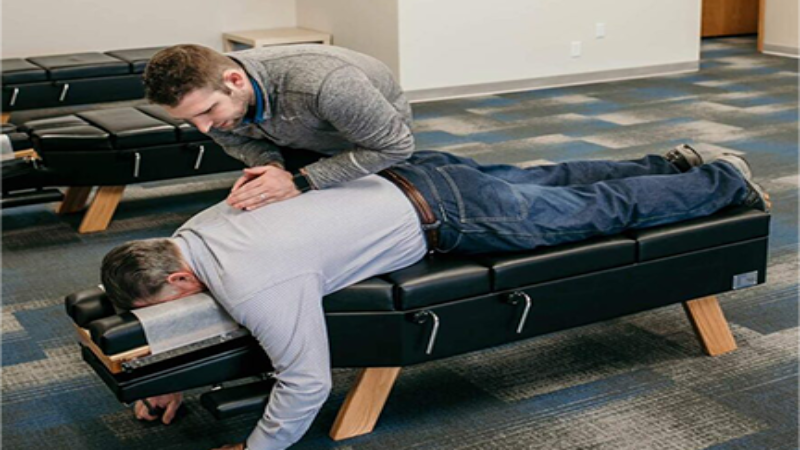
People exploring conservative options for back or neck discomfort often come across two common approaches: spinal decompression therapy and traditional chiropractic adjustments. In San Diego, California, these services are frequently discussed together because they can complement each other, but they are not the same treatment and they are not used for the same situations. This guide explains the differences, when each is typically used, and how they fit into chiropractic services in San Diego, CA without relying on invasive or medication-based strategies.
What is spinal decompression therapy?
Spinal decompression therapy is a non-surgical, traction-based treatment that uses controlled pulling forces to gently separate spinal segments for short intervals. The goal is to reduce pressure on spinal discs and joints and create a more comfortable mechanical environment around irritated structures, including areas near nerve roots.
Decompression is commonly discussed when symptoms appear connected to compression patterns, such as:
- Discomfort that worsens with prolonged sitting or driving
- A pressure-like sensation in the low back or neck
- Symptoms that flare with repeated bending or lifting
- Posture-sensitive symptoms that improve with gentle unloading
- Radiating sensations that may relate to mechanical irritation
Because decompression is delivered in measured cycles and typically targets disc pressure patterns, it is often planned as a series rather than a one-time session.
What are traditional chiropractic adjustments?
Traditional chiropractic adjustments are precise, controlled manual techniques aimed at restoring healthier motion to restricted joints—most commonly in the spine. Joint restriction can cause stiffness, reduced mobility, and muscle guarding as the body tries to stabilize an area that isn’t moving well.
Adjustments are commonly used when:
- A joint feels “stuck” or motion is limited
- Neck or back stiffness is a primary complaint
- Symptoms are linked to reduced mobility or postural strain
- Muscle tension persists due to restricted movement
- The goal is to improve movement quality and reduce compensation
Adjustments are not simply about “cracking” or “realigning.” The functional goal is improving joint motion so the spine distributes load more evenly.
How are decompression and adjustments different?
Although both are conservative and movement-focused, they address different mechanical needs:
- Decompression therapy primarily targets compressive load—reducing disc and joint pressure through controlled traction cycles.
- Chiropractic adjustments primarily target joint restriction—restoring motion to segments that are not moving well.
Another key difference is delivery:
- Decompression is typically delivered through a device with specific settings and timed cycles.
- Adjustments are delivered manually and tailored moment-by-moment based on joint feel, mobility, and tolerance.
Both approaches can influence muscle tension and movement comfort, but they do so through different mechanisms.
When is spinal decompression therapy typically used?
Decompression is often considered when disc pressure and compression patterns are suspected contributors to symptoms. These patterns may include:
Posture-sensitive pain
Pain that worsens during prolonged sitting, improves when standing or walking, and returns with a return to sitting often suggests compressive loading sensitivity.
Disc-related stress patterns
Pain that flares with repeated bending, lifting, or twisting may indicate that certain movement patterns are stressing disc tissues and surrounding structures.
Radiating symptoms that change with position
Some individuals experience tingling, numbness, or radiating discomfort that increases with certain postures and decreases with unloading positions.
Importantly, not every radiating symptom indicates disc pressure, and decompression is not automatically appropriate in all cases. Evaluation is necessary to determine whether traction-based care fits the presentation.
When are traditional chiropractic adjustments typically used?
Adjustments are often used when restricted mobility and joint dysfunction appear to be primary drivers. These cases may include:
Stiffness-dominant discomfort
Some people feel more “locked up” than painful—limited turning, bending, or rotating, especially after inactivity.
Posture and work-related strain
Prolonged desk work and driving can reduce upper back mobility, forcing the neck and low back to compensate. Adjustments may be used to restore motion to areas that have become restricted.
Muscle guarding and tension patterns
Restricted joint motion often leads to protective muscle tension. Restoring mobility can reduce the need for constant muscular “bracing.”
Performance and movement efficiency goals
In active individuals, restoring joint motion can improve movement efficiency, which may reduce repetitive strain patterns during sports and training.
Can decompression and adjustments be used together?
Yes, they are often discussed as complementary tools within conservative care plans. When a person has both disc pressure sensitivity and joint restriction, a plan may combine strategies that address both issues.
For example:
- Decompression may be used to reduce compressive stress and improve tolerance.
- Adjustments may be used to restore mobility so the spine and hips distribute load more evenly.
- Movement strategies and strengthening may be used to reduce recurrence.
This “toolbox approach” is common in many chiropractic services in San Diego, CA, especially when symptoms involve both stiffness and load sensitivity.
What should a conservative evaluation include?
Before choosing decompression, adjustments, or both, a conservative evaluation typically focuses on:
- What positions worsen or relieve symptoms
- Range of motion limits (where movement is restricted)
- Posture and movement patterns (how load is managed)
- Functional triggers (sitting tolerance, lifting tolerance, sports activity)
- Neurological screening when symptoms suggest nerve involvement
The goal is to match care to the pattern, not the label. Two people can both report “low back pain,” but one may be stiffness-driven while another is compression-driven.
Practical self-care that supports both approaches
Regardless of whether decompression or adjustments are used, daily habits often determine how well results hold. Supportive strategies include:
- Movement breaks during prolonged sitting
- Neutral spine positioning while driving
- Hip hinge mechanics during lifting
- Walking to reduce stiffness and improve circulation
- Gradual strengthening to improve load tolerance
These habits reduce repetitive stress and help the spine maintain mobility and resilience.
Learning more about conservative care options in San Diego
Many people prefer to research conservative approaches before deciding on care. Educational resources from a best chiropractic partner can help readers understand how decompression therapy and chiropractic adjustments are commonly used in movement-focused care models in San Diego, California.
Key takeaways
Spinal decompression therapy and traditional chiropractic adjustments are both conservative approaches, but they target different mechanical needs. Decompression focuses on reducing disc and joint pressure through traction cycles, while adjustments focus on restoring healthier joint motion where restrictions contribute to stiffness and muscle guarding. For many people in San Diego, California, understanding the difference helps clarify which approach may be most appropriate—and how both may fit within a broader plan that includes movement guidance and long-term load management.