
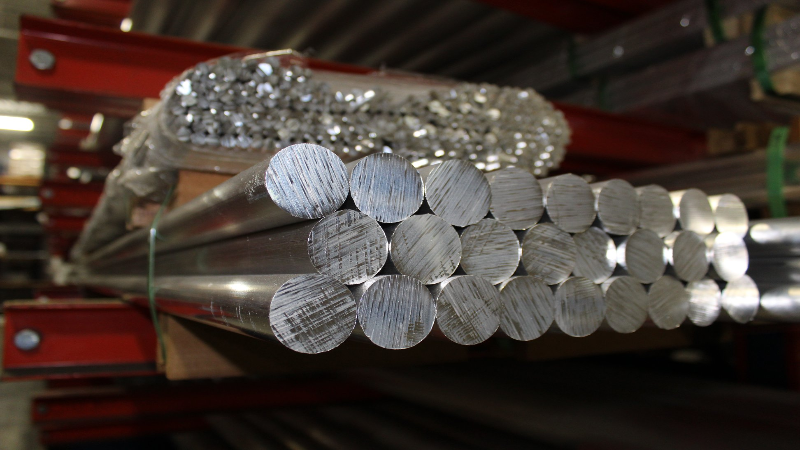
In the evolving landscape of American manufacturing and custom fabrication, achieving accuracy and durability remains a top priority for engineers, designers, and machinists. One of the most sought-after materials for these applications is metal that offers a perfect blend of strength, workability, and versatility. When searching for materials that can deliver reliable performance in precision-driven projects, many professionals turn to Aluminum Round Bar. This material has become a staple across diverse industries, supporting everything from large-scale manufacturing to intricate custom projects.
The Role of Aluminum Round Bar in Precision Manufacturing
Aluminum round bar is highly valued for its ability to meet tight tolerances and deliver consistent results. Its excellent machinability allows manufacturers to create complex components with minimal waste, while its uniform composition ensures reliable performance across batches. In sectors such as aerospace, automotive, and electronics, where even the smallest deviation can impact safety or function, aluminum round bar is often the preferred choice.
Some of the key advantages of using aluminum round bar in precision manufacturing include:
• Dimensional Stability: Aluminum’s low coefficient of thermal expansion reduces the risk of warping or distortion during machining and in service.
• Corrosion Resistance: The natural oxide layer protects components from rust and environmental damage, making it ideal for long-lasting applications.
• High Strength-to-Weight Ratio: Its lightweight nature does not compromise strength, allowing for stronger yet lighter parts that improve efficiency and performance.
Supporting Custom Projects and Prototyping
For custom fabrication shops and prototyping teams, flexibility is crucial. Aluminum round bar is available in a wide range of diameters and grades, making it suitable for projects of varying scales and specifications. Whether producing a single custom bracket or hundreds of precision parts, machinists benefit from aluminum’s ease of cutting, drilling, and finishing.
Custom projects often demand materials that can be quickly adapted to new designs or modifications. Aluminum round bar supports rapid iteration thanks to:
• Versatile Machinability: Easily milled, turned, or threaded to exact dimensions.
• Surface Finish Options: Can be polished, anodized, or coated to meet aesthetic and functional requirements.
• Readily Available Stock: Common sizes are widely stocked, minimizing lead times and keeping projects on schedule.
Meeting the Needs of Modern American Manufacturing
Today’s manufacturing environment places a premium on efficiency, repeatability, and cost-effectiveness. Aluminum round bar addresses these needs by offering a material that is both easy to source and process. Its recyclability also aligns with the growing emphasis on sustainability in American industry, reducing both waste and environmental impact.
Moreover, aluminum’s compatibility with advanced manufacturing technologies, such as CNC machining and automation, ensures that it remains relevant as production methods evolve. Its predictable behavior under stress and during fabrication means fewer surprises and more consistent outcomes—key factors in maintaining quality standards and customer satisfaction.
In summary, aluminum round bar plays a vital role in supporting the precision and adaptability demanded by American manufacturers and custom project specialists. Its unique blend of machinability, strength, and versatility empowers professionals to transform innovative ideas into high-quality, reliable products. As industries continue to advance, the importance of materials that deliver both performance and flexibility is only set to grow, making aluminum round bar an indispensable component in the toolkit of modern manufacturing.