
Bottom line:
- A well-chosen wedding suit balances fabric weight, color, and fit to match the ceremony’s season, venue, and formality.
- Custom tailoring addresses body proportion issues that off-the-rack sizing cannot solve.
- Scheduling fittings early in the planning timeline allows room for adjustments before the event date.
Choosing Wedding Suits For Men starts with matching fabric and formality to the wedding’s season and venue, then confirming fit through a proper measurement process rather than standard sizing alone. Grooms who select a suit based on these three factors typically avoid last-minute alterations and discomfort on the event day.
Fabric choice carries more weight in the decision than color or cut because it affects comfort throughout a multi-hour event. According to a wedding suiting guide, spring and summer events call for linen, cotton, or lightweight wool under 9 ounces, while fall and winter weddings favor heavier wool, flannel, or velvet accents in the 10 to 14 ounce range. Mid-weight wool between 9 and 10 ounces is the safer choice for year-round or indoor ceremonies, since it performs across temperature ranges.
Matching Suit Style to Wedding Formality
Dress code dictates silhouette and detailing before color enters the conversation. A daytime garden ceremony calls for a different jacket weight and lapel style than an evening black-tie reception.
- Casual or beach ceremonies: Unstructured jackets in linen-cotton blends suit warm, outdoor settings.
- Semi-formal to cocktail: A tailored two-piece suit in worsted wool covers most venues and seasons.
- Black-tie or formal evening events: A tuxedo or structured three-piece suit in fine wool is standard.
Industry fabric guidance notes that daytime weddings generally call for worsted wool in cooler months and lightweight wool or wool-linen blends in warmer months. Matching the fabric to both the season and the ceremony’s formal level reduces the chance of overheating or looking underdressed in photographs.
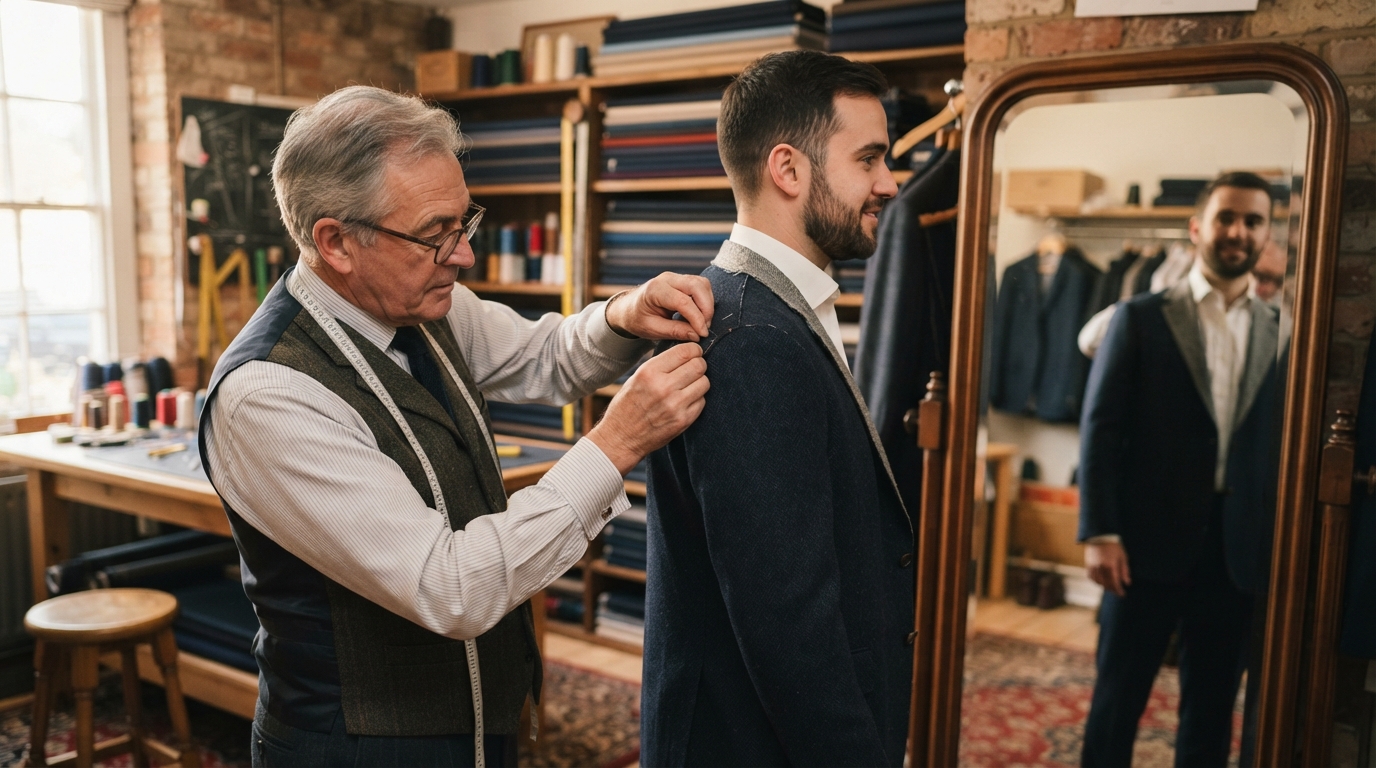
Fit, Measurement, and the Custom Tailoring Process
Standard sizing assumes an average body shape that few people actually have. A tailored approach adjusts for chest, shoulder, and sleeve proportions that off-the-rack suits cannot account for.
- Initial measurement and consultation to record body proportions and discuss fabric and style preferences.
- Fabric and detail selection, including lapel style, lining, and buttons.
- Construction, often involving hand-stitched canvas for structure and shape retention.
- Fitting adjustments before final delivery to confirm sleeve length, shoulder seam placement, and overall drape.
Clients preparing for a fitting should wear the shoes and undergarments they plan to pair with the finished suit, since footwear height and shirt fit can shift trouser break and sleeve length measurements.
Comparing Common Wedding Suit Options
|
Suit Type |
Best For |
Typical Fabric |
|
Two-piece suit |
Semi-formal daytime or outdoor ceremonies |
Wool or wool-linen blend |
|
Three-piece suit |
Formal or cooler-season weddings |
Mid to heavyweight wool |
|
Tuxedo |
Black-tie or evening receptions |
Fine worsted wool |
|
Linen or cotton suit |
Beach or warm-weather settings |
Linen, cotton-linen blend |
Grooms planning a wedding in or around Chesterfield, VA should factor in the region’s seasonal temperature swings when selecting fabric weight, since a suit built for a spring afternoon may feel uncomfortably warm by late summer. Reviewing a regional fabric guide such as The Knot’s seasonal suiting advice alongside a tailor’s recommendation can help narrow fabric and color choices before the first fitting.
Frequently Asked Questions
How far in advance should a wedding suit be ordered? Custom suits involve multiple fitting stages, so starting the process several months ahead of the event date allows time for adjustments without pressure near the wedding.
Can groomsmen suits be coordinated with the groom’s suit? Yes, coordinating fabric, color, or style between the groom and wedding party is common and typically discussed during the initial consultation.
What should be worn to a suit fitting appointment? Bringing the shoes and shirt style intended for the wedding day helps the tailor confirm accurate sleeve, trouser, and jacket length measurements.
Is a custom suit necessary, or does off-the-rack work for weddings? Off-the-rack suits can work for standard body proportions, but custom tailoring addresses fit issues in the chest, shoulders, or sleeves that alterations alone often cannot fully correct.
Business Info
Based in Norfolk, VA, Andre’ Julius Custom Suits & Tuxedos (View Wedding Suits for Men) extends its tailoring services to clients across Chesterfield, VA, among other areas in the region.
Planning Your Fitting Timeline
Readers can View Wedding Suits for Men for published location and contact details relevant to scheduling a consultation.