
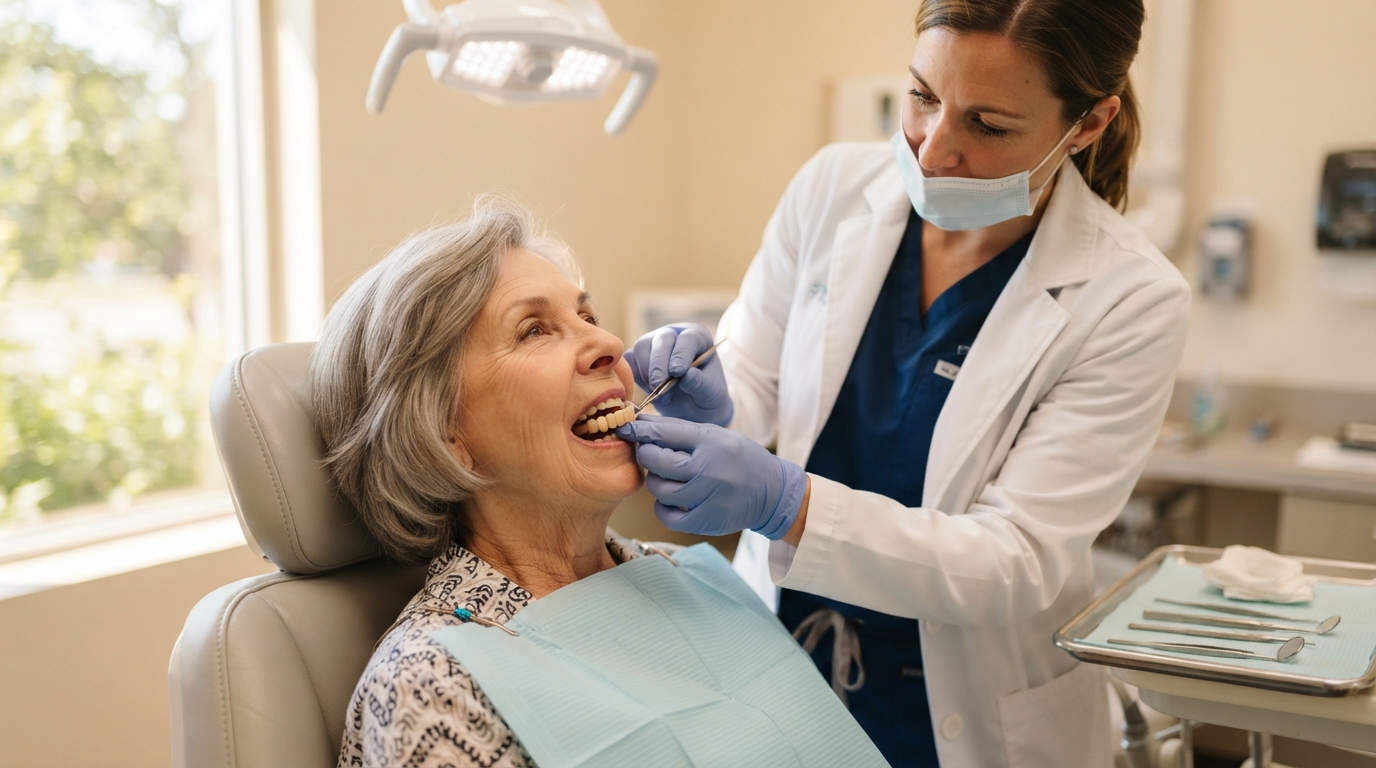
• Dental dentures Richland, WA replace missing teeth with removable appliances custom-fit to the mouth, restoring chewing function and facial support.
• Fit depends on jawbone condition, denture type, and follow-up adjustments after placement.
• Readers in Richland, WA can review verified treatment information before scheduling a consultation.
Dental dentures are removable prosthetic devices designed to replace missing natural teeth and restore the ability to chew, speak, and maintain facial structure. A well-fitted denture rests securely against the gums and jawbone, distributing bite pressure evenly without slipping or causing irritation.
Selecting the right type of Dental Dentures involves more than picking an appliance off a shelf. Fit is determined by the condition of the jawbone, the number of remaining natural teeth, and how the gums have changed shape over time. These factors influence whether a full, partial, or implant-supported denture is the most practical option for a given patient.
How Denture Type Affects Comfort and Fit
Denture categories differ in how they attach to the mouth and how much bone support they require. Understanding these differences helps explain why one style may feel more secure than another for the same patient.
• Complete dentures replace an entire arch of teeth and rely on suction or adhesive against the gums.
• Partial dentures fill gaps where some natural teeth remain, using clasps or precision attachments for stability.
• Implant-supported dentures anchor to surgically placed implants, reducing movement during chewing and speech.
Each style places different demands on the jawbone and surrounding tissue. According to the National Institute of Dental and Craniofacial Research, denture wearers may need periodic adjustments as the jawbone and gum ridge continue to change shape after tooth loss. This ongoing bone remodeling is one reason dentures that fit well initially can loosen over time without relines or refitting.
Comparing Denture Options
|
Denture Type |
Best Suited For |
Stability Level |
Typical Maintenance |
|
Complete (Full) |
Patients missing all teeth in an arch |
Moderate, depends on ridge shape |
Regular cleaning, periodic relines |
|
Partial |
Patients with some remaining healthy teeth |
Moderate to high, aided by clasps |
Daily cleaning, clasp checks |
|
Implant-Supported |
Patients with adequate bone density |
High, minimal shifting |
Implant care, professional checkups |
This comparison highlights trade-offs rather than a single best choice. A dentist evaluates bone density, gum health, and budget before recommending a specific path.
Steps to a Natural-Looking, Comfortable Fit
A natural fit depends on precise measurements, tooth shade matching, and realistic jaw alignment. Skipping steps in this process often leads to visible gaps, uneven bite pressure, or an unnatural smile line.
1. Initial evaluation of remaining teeth, gum tissue, and jawbone structure.
2. Impressions and bite registration to capture the exact shape of the mouth.
3. Try-in fitting to check tooth placement, color, and speech clarity before final production.
4. Final adjustments after the denture is worn for a short period, since gum tissue can shift slightly during the adaptation phase.
Follow-up visits matter because new dentures almost always need minor adjustments once a patient begins eating and speaking with them regularly.
Business Info
Based in USA, Browse Denture Treatment Options serves customers across Richland, WA, offering restorative dental services that include denture evaluation and fitting as part of a broader restorative dentistry practice Browse Denture Treatment Options.
Frequently Asked Questions
How long does it take to adjust to new dentures? Most patients need several weeks to adapt to speaking and eating with new dentures, though exact timelines vary based on individual gum sensitivity and denture type.
Can partial dentures be converted to implant-supported dentures later? In some cases, yes, provided there is sufficient jawbone density to support implants, though a dentist must evaluate bone volume first.
Why do dentures need periodic relining? Jawbone and gum tissue continue to change shape after tooth loss, which can cause a previously well-fitted denture to loosen over time.
Are implant-supported dentures more expensive than traditional dentures? Implant-supported options generally cost more upfront due to the surgical component, though they often provide greater long-term stability.
Final Notes on Finding the Right Fit
Choosing between complete, partial, and implant-supported dentures depends on individual oral health factors that only a clinical evaluation can confirm. Patients benefit from asking direct questions about bone density, expected adjustment periods, and maintenance routines before committing to a specific appliance type.
Additional information on evaluation steps and appointment scheduling is available through Browse Denture Treatment Options.