
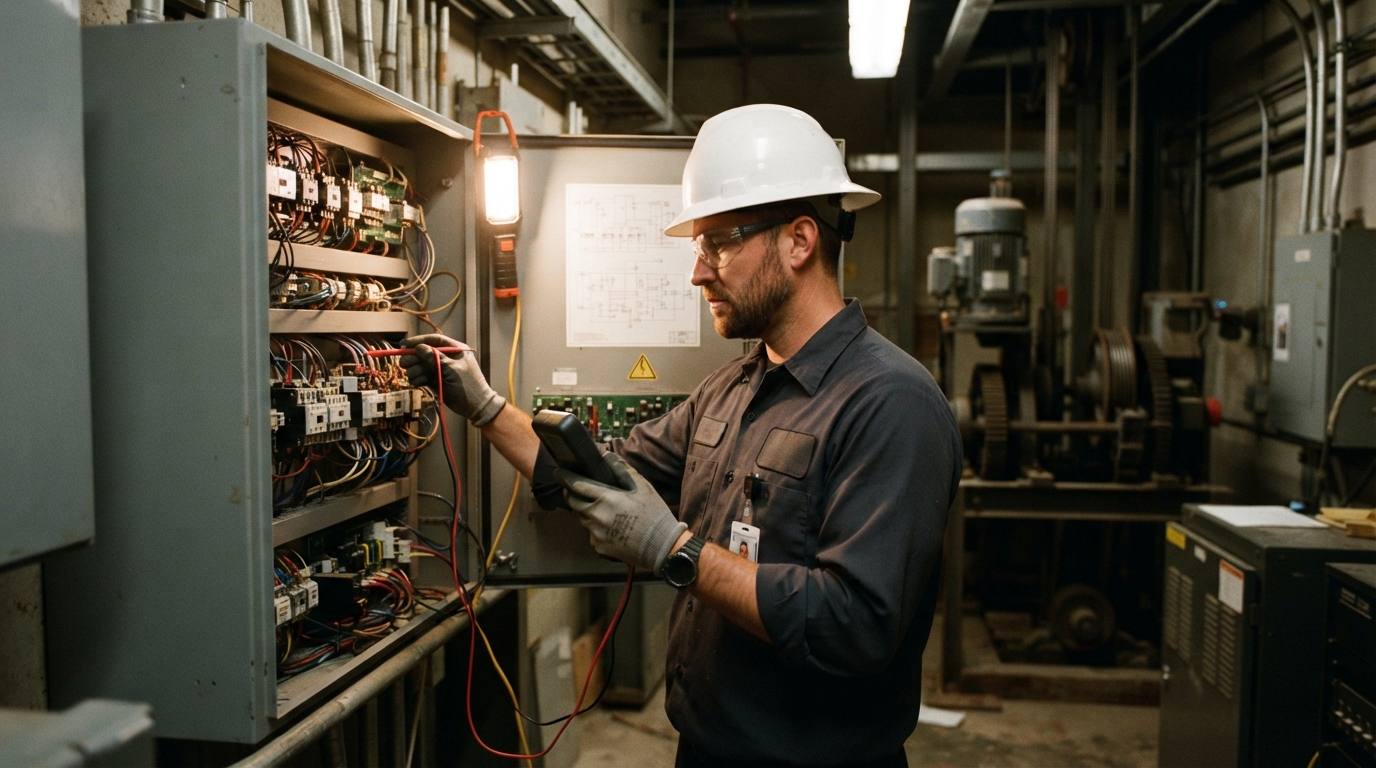
• An elevator technician needs mechanical, electrical, and troubleshooting skills built through a multi-year apprenticeship and ongoing safety training.
• Core competencies include reading schematics, diagnosing controller faults, and following OSHA-aligned safety procedures.
• Property managers in New Jersey can use these skills as a checklist when evaluating a service provider’s technical qualifications.
A qualified Elevator Technician combines mechanical aptitude, electrical troubleshooting ability, and strict adherence to safety codes to keep vertical transportation systems running safely. These competencies are developed through structured apprenticeship training and reinforced through years of hands-on fieldwork. Based in New York City, Champion Elevator Corp serves customers across New Jersey, and the technical standards outlined here reflect the broader training pathway recognized across the elevator trade.
Building owners and property managers in New Jersey rely on technicians who have mastered a specific blend of trade skills. Understanding what those skills are helps readers evaluate service quality, even when they are not hiring an elevator company directly.
Mechanical and Electrical Foundations
Elevator systems combine hydraulic, electrical, and mechanical components that must work in precise coordination. Core skills for elevator mechanics include equipment maintenance, troubleshooting, repairing, critical thinking, operations monitoring, and installation, paired with knowledge of mechanical systems, building and construction, and public safety.
Technicians typically build these foundations before entering formal training. Developing strong mechanical and electrical foundations before applying for an apprenticeship is useful, and courses in math, physics, and shop during high school help build the problem-solving and technical background needed to understand elevator systems. Some pursue further education first.
• Technical certificates or associate degrees in electrical technology or industrial maintenance cover wiring, hydraulics, and blueprint reading that prepare candidates for advanced training.
• Reading electrical schematics to trace faults in controllers and wiring systems.
• Interpreting blueprints to understand component layout before repair or installation work.
Apprenticeship Training and Certification
Formal apprenticeship remains the primary route into the trade. Most candidates enter through a paid apprenticeship combining full-time supervised work with classroom training, and the U.S. Bureau of Labor Statistics reported a median annual wage of 109,910 dollars for elevator and escalator installers and repairers in May 2025.
The time commitment is substantial. Apprenticeship programs typically assign 2,000 hours of on-the-job learning per year across four years, for a total of 8,000 hours, covering safety, print reading, rigging and hoisting, installation, maintenance, troubleshooting, and electrical work. Coursework advances in stages, with later semesters addressing more complex systems.
Advanced coursework focuses on elevator electrical schematic reading and troubleshooting techniques for elevator controllers, often including repair exercises with hundreds of real-world faults to prepare apprentices for mechanic status. Certification bodies reinforce this training.
• Certification through organizations such as the National Association of Elevator Contractors is often necessary to meet industry standards, safety regulations, and local licensing requirements.
• Some jurisdictions recognize the Certified Elevator Technician program as a credential for both residential and commercial work.
• Apprenticeship programs require completion of on-the-job training hours and coursework modules, along with compliance with OSHA safety regulations and industry standards.
Safety, Diagnostics, and Field Skills Compared
|
Skill Area |
What It Involves |
Why It Matters |
|
Mechanical diagnostics |
Identifying worn cables, motors, and control system faults |
Prevents equipment failure and downtime |
|
Electrical troubleshooting |
Reading schematics, testing circuits, repairing controllers |
Addresses malfunctions without full part replacement |
|
Safety compliance |
Testing safety systems, emergency brakes, and following OSHA and local safety regulations |
Protects building occupants and technicians |
|
Physical readiness |
Comfort working at heights and in tight spaces, physical stamina and strength |
Required for installation and repair work |
Safety training is woven throughout every stage of certification. According to OSHA, workplace safety regulations set the baseline standards that elevator technicians must follow during installation, service, and repair work.
Why This Skill Set Matters for New Jersey Properties
Commercial and residential buildings across New Jersey depend on elevators that pass mandatory inspections and operate without unplanned outages. A technician’s ability to diagnose a fault correctly on the first visit reduces both downtime and repeat service calls.
Typical responsibilities include installing new elevator and escalator systems, diagnosing mechanical and electrical malfunctions, performing routine maintenance and inspections, replacing worn cables, motors, or control systems, and testing safety systems and emergency brakes. Each of these tasks draws on the combined mechanical, electrical, and safety training described above.
Frequently Asked Questions
How long does it take to become a licensed elevator technician? Each year of an apprenticeship includes at least 144 hours of classroom instruction and 2,000 hours of on-the-job experience, and it usually takes about four years to complete the apprenticeship and meet licensing requirements.
What certifications do elevator technicians typically hold? Common credentials include OSHA 10 or OSHA 30 safety certification and trade credentials such as the Certified Elevator Technician designation, which are recognized across the industry as markers of qualified training.
Do elevator technicians need math and physics skills? Yes. Apprenticeship testing and coursework both emphasize measurement, circuit analysis, and mechanical reasoning as part of core technical preparation.
What is the difference between an elevator technician and an elevator mechanic? Elevator technicians typically assist elevator mechanics in ensuring the safety and functionality of an elevator, including moving and raising components and assisting in disassembly and assembly using hand tools. Mechanics generally hold more advanced certification and take on independent diagnostic and repair responsibility.
Service Area Information
Champion Elevator Corp is a full-service elevator company headquartered in New York City, with technicians trained in maintenance, repair, modernization, and testing work. Current service area details for Champion Elevator Corp. are published for review by property owners and managers.