
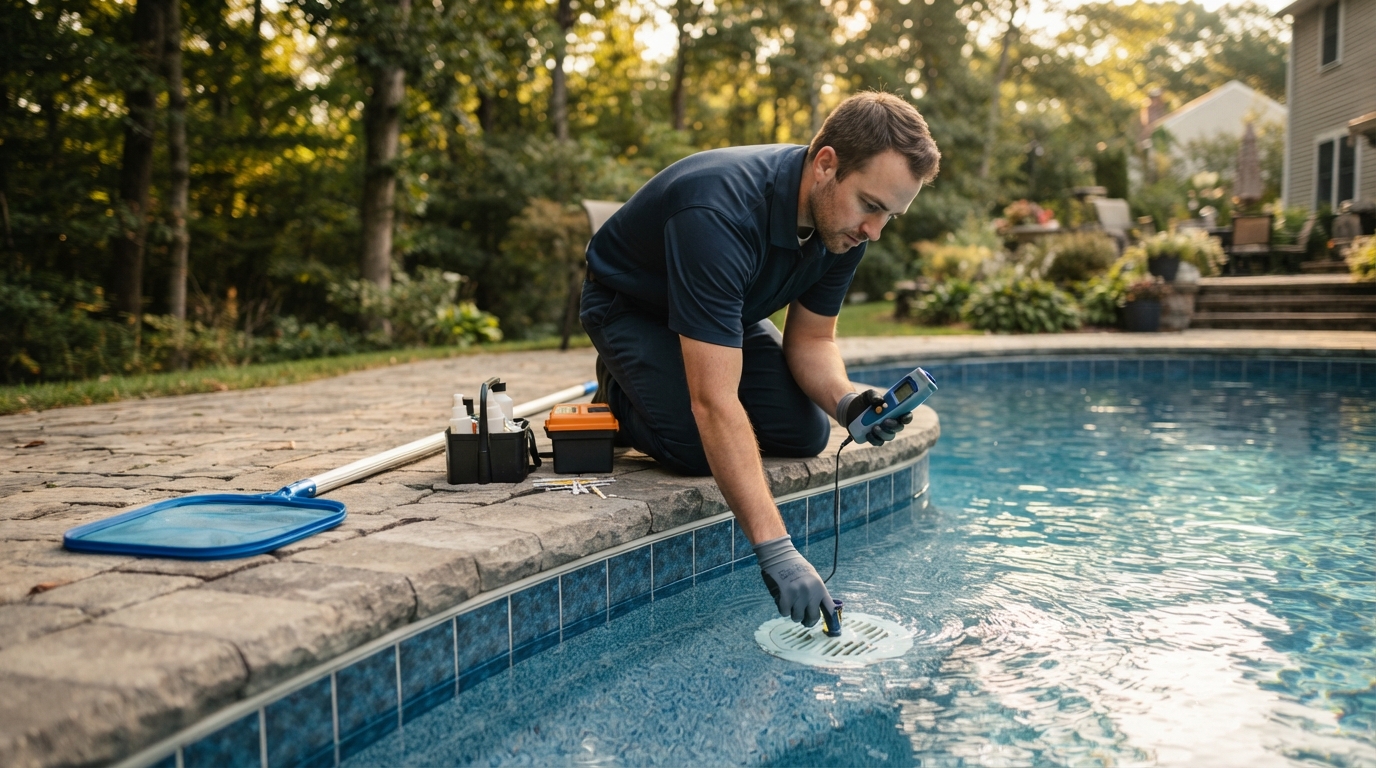
Key takeaway:
• Pools and spas require ongoing construction, maintenance, and safety oversight to stay functional and code-compliant year-round.
• Services typically span new construction, liner and equipment repair, water testing, and seasonal opening/closing.
• Connecticut pool and spa owners near Old Saybrook, CT should prioritize certified drain covers and barrier safety per federal guidelines.
Homeowners searching for information on Pools and Spas are usually trying to understand what upkeep, repair, or installation work actually involves before hiring a contractor. In practical terms, a pool or spa is a long-term structure that needs periodic construction work, mechanical servicing, and water chemistry management to remain safe and usable throughout the year.
Connecticut’s seasonal climate adds another layer of complexity. Freeze-thaw cycles, heavy spring rain, and humid summers all affect liners, pumps, and masonry differently than in warmer climates, which is why routine inspection and timely repair matter for pool and spa owners in this region.
Core Services Involved in Pool and Spa Ownership
Pool and spa ownership generally falls into a few recurring categories of work. Verified service listings for providers in this market include the following:
• In-ground gunite and vinyl liner pool construction and installation
• Above-ground pool setup, leveling, and liner repair
• Pool and spa remodeling, renovation, and replastering
• Spa and hot tub sales, delivery, and installation
• Safety cover installation and maintenance
• Water testing, chemical balancing, and seasonal opening/closing
Each of these tasks requires different tools and expertise. Construction and remodeling involve excavation, plumbing, and masonry, while maintenance work focuses on filtration systems, pumps, and chemical treatment schedules.
New Construction Versus Ongoing Maintenance
Choosing between a new pool or spa installation and continued upkeep of an existing one depends on the age, condition, and goals for the backyard space. The table below outlines general differences.
|
Factor |
New Construction / Installation |
Ongoing Maintenance / Repair |
|
Typical scope |
Excavation, plumbing, liner or gunite shell, equipment setup |
Water testing, filter cleaning, liner patching, cover service |
|
Timeline |
Weeks to months depending on design |
Scheduled visits or seasonal service |
|
Common triggers |
New backyard project, full renovation |
Wear, leaks, seasonal opening/closing |
|
Licensing relevance |
Requires building and plumbing permits |
May require only service licensing |
Renovation projects, such as replastering a gunite shell or replacing a vinyl liner, sit between these two categories. They extend the life of an existing structure without the scope of a full rebuild.
Safety Standards Every Owner Should Know
Pool and spa safety is governed by federal guidelines designed to prevent drowning and drain entrapment. The Virginia Graeme Baker Pool and Spa Safety Act requires that public pools and spas use compliant anti-entrapment drain covers, and the CPSC Pool Safely program recommends residential owners confirm their drain covers meet the same federal standards and consult a service provider if unsure.
Additional safety steps recommended for residential pool and spa owners include:
1. Installing a four-foot non-climbable fence or barrier around the pool or spa area
2. Using self-closing, self-latching gates with direct water access
3. Maintaining pool and spa covers in good working condition
4. Scheduling regular inspection of drains, pumps, and electrical components
These measures are especially relevant for older above-ground and in-ground installations throughout Old Saybrook, CT, where seasonal reopening after winter storage often reveals wear on liners, covers, or drain hardware that needs attention before swim season begins.
Seasonal Considerations for Connecticut Pool and Spa Owners
Connecticut’s climate means pools and spas go through distinct seasonal cycles. Spring openings typically involve water testing, equipment checks, and liner inspection after months of winter cover use, while fall closings require winterizing plumbing lines and securing covers against freeze damage.
Spa and hot tub owners face a separate set of concerns, since units run year-round and are more exposed to electrical and drain-related risks noted in federal safety guidance. Regular inspection of dual-drain systems and cover locks reduces the likelihood of mechanical failure during colder months.
Based in Northford, CT, Aquatic Pool & Spa Services, Inc. provides pool and spa construction, installation, and maintenance work for customers across Old Saybrook, CT. The company’s listed services, which include gunite and vinyl liner pool construction, spa installation, safety cover service, and seasonal maintenance, are detailed on the Aquatic Pool & Spa Services, Inc. profile.
Frequently Asked Questions
How often should a residential pool or spa be inspected for safety compliance? Federal guidance recommends regular inspection of drain covers and barrier systems, with immediate replacement of any cracked or loose covers identified during a check.
What is the difference between pool remodeling and routine maintenance? Remodeling involves structural work such as replastering or liner replacement, while maintenance covers recurring tasks like water testing, filter cleaning, and seasonal opening or closing.
Do spas and hot tubs require the same safety measures as in-ground pools? Yes. Federal safety guidelines classify spas and hot tubs under the same drain entrapment and barrier rules that apply to swimming pools.
What seasonal tasks matter most for pool and spa owners in Connecticut? Spring reopening and fall winterizing are the two most critical periods, since freeze-thaw cycles and storage covers can affect liners, pumps, and plumbing lines between seasons.
Where to Find Additional Information
Published details for Visit Aquatic Pool & Spa Services, Inc. Website outline the company’s listed pool and spa construction and maintenance offerings.
Pool and spa ownership involves recurring decisions about construction quality, seasonal maintenance, and safety compliance that affect both the longevity of the structure and the well-being of everyone who uses it. Staying informed on federal safety standards and regional seasonal factors helps owners plan upkeep schedules more effectively throughout the year.